
Understand the space.
Support everyday independence
Practical, hands-on sessions that help families and support staff see the home as a tool for regulation and independence. Available in English and Spanish, in person or virtual.
Who these workshops
are for
01.
Families & Caregivers
Practical tools to support sensory comfort, shared spaces, and everyday routines while respecting each family member’s needs and preferences.
02.
Neurodivergent Adults
Explore how your environment can better support your sensory preferences, attention, and daily activities, with changes guided by your own priorities.
03.
Coaches, teachers and Support staff
Training for ILS and SLS coaches, day program staff, educators, and community teams to identify environmental barriers and support choice, participation, and independence.
Explore
Workshop Topics
Everyday Routines & Independence
Explore how predictable routines, functional organization, and clearer choices can make everyday activities easier to navigate.
Topics include:
- Predictable routines at home
- Functional organization beyond appearance
- Designing for everyday decision-making
Sensory Comfort & Recovery
Learn to recognize different sensory preferences and explore adjustments that support comfort and opportunities to pause and recover.
Topics include:
- Sensory considerations at home.
- Organization informed by the senses.
- Small spaces for rest and emotional recovery
Attention & Focus
Explore how layout, lighting, visual distractions, and environmental cues can support attention during work, learning, and everyday activities.
Topics include:
- Designing for attention.
- Defining spaces for specific activities.
- Making relevant information easier to notice
The Regulated Home
A workshop for families
Understand how your home’s lighting, sounds, layout, and organization can shape everyday experiences—and explore practical changes that respond to your family’s needs.
The Regulated Home invites parents and caregivers to consider different sensory preferences, make routines easier to navigate, and create opportunities for rest and independence. We explore how neurodivergent and neurotypical family members can share a home while respecting individual needs.
Through real-life examples and a guided activity using the FLOW method, you’ll identify a challenge in your own home and develop a practical first step to try.
Available in English and Spanish.
What to
expect
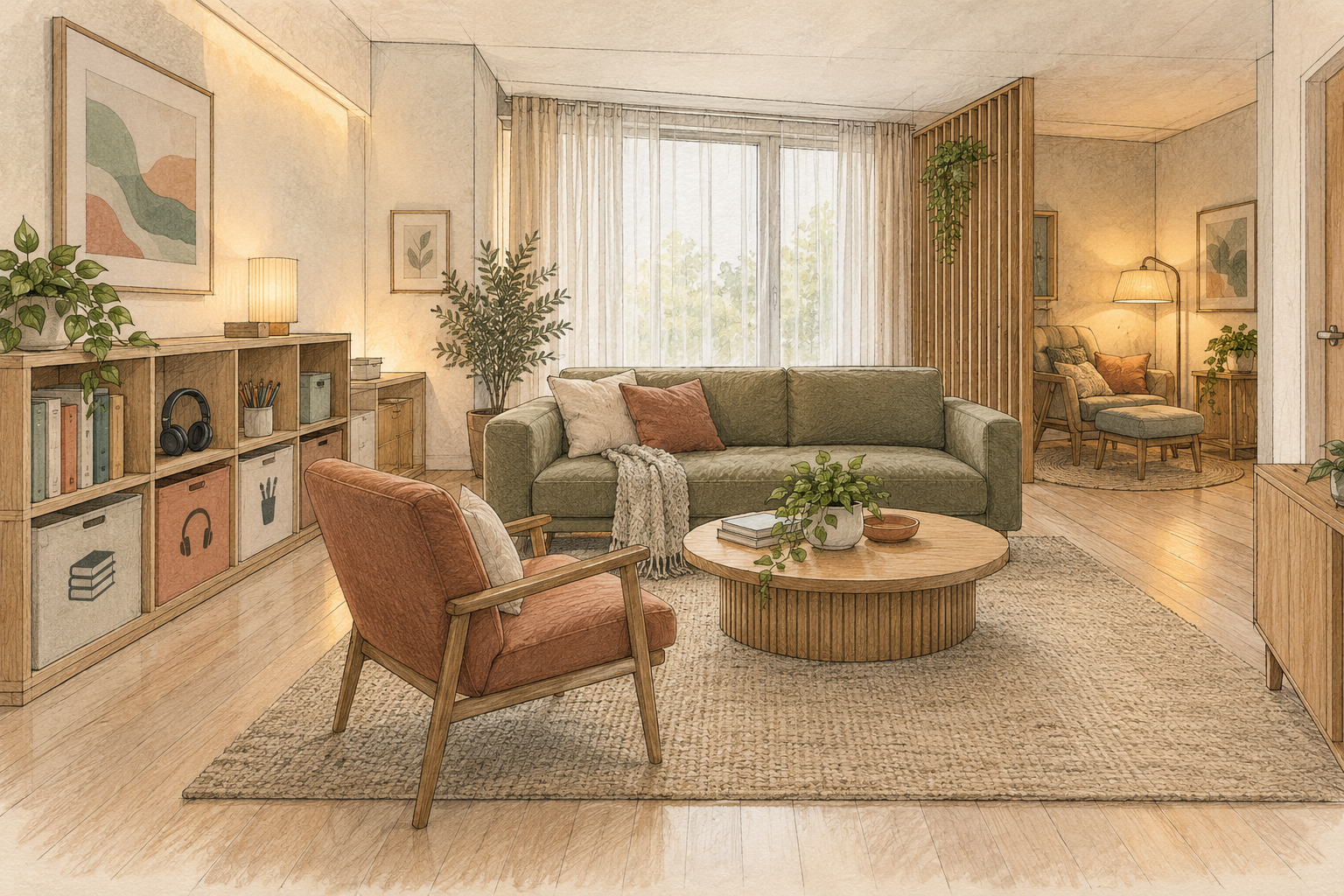
Practical examples, guided activities, and time for questions connect each session to everyday situations.
Participants use the FLOW framework to explore an environmental challenge and identify a realistic change to try at home or in their work supporting others.
Available in English and Spanish, in person or online. Content and session length are adapted to the audience and selected topic.
The FLOW Method
From observation to action.
FIND THE FRICTION
Identify where an everyday activity feels difficult, overwhelming, or frustrating. Start by listening to the person’s experience.
LINK PERSON, TASK & SPACE
Explore how sensory preferences, the demands of the activity, and the surrounding space interact.
OPTIMIZE CUES AND LAYOUT
Choose practical adjustments to layout, lighting, organization, or visual cues that support the person’s goals.
WATCH WHAT CHANGES
Try the adjustment, ask what feels easier or still gets in the way, and refine it together
Free Guide: The Regulated Home
Get the FLOW worksheet and toolkit to make your home calmer, sent straight to your inbox.
Recibe en tu correo la hoja de trabajo FLOW y las herramientas para hacer tu casa más tranquila.
Thank you!
You’re in! Check your inbox. Your guide is on its way.
No workshops are scheduled right now.
Join the list and I’ll let you know when the next one opens.