
Creating a bedroom for a child with ADHD isn’t about making the room perfectly organized, removing everything stimulating, or following a specific design style.
It’s about understanding how the environment can make everyday activities easier or harder.
A bedroom may need to support very different activities throughout the day: getting dressed, finding belongings, doing homework, playing, transitioning between activities, and winding down for sleep. When the space creates too many demands, these everyday tasks can become more difficult.
Thoughtful design can help reduce some of that friction.
Why Bedroom Design Matters for a Child with ADHD
Children with ADHD may experience differences in attention, organization, working memory, and executive functioning. The physical environment can either add to those demands or help reduce them.
Too many competing visual elements may make it harder for some children to locate what they need or focus on a task. Complicated storage systems can turn putting something away into a multi-step process. Poorly defined areas can also make it less obvious what activity is expected in each part of the room.
But there is an important point: there is no single “ADHD bedroom.”
What feels distracting to one child may feel comfortable or engaging to another. The goal is not to create a perfectly calm or minimalist room. The goal is to create a space that works for the individual child.
Create Clear Zones for Different Activities
One of the most useful strategies is to give different activities a clear place within the room. A bed communicates rest. A defined desk area supports homework or creative activities. Accessible shelves can make books and favorite objects easier to find.
These zones don’t need walls or large amounts of space. Furniture placement, lighting, rugs, or storage can help create visual boundaries.
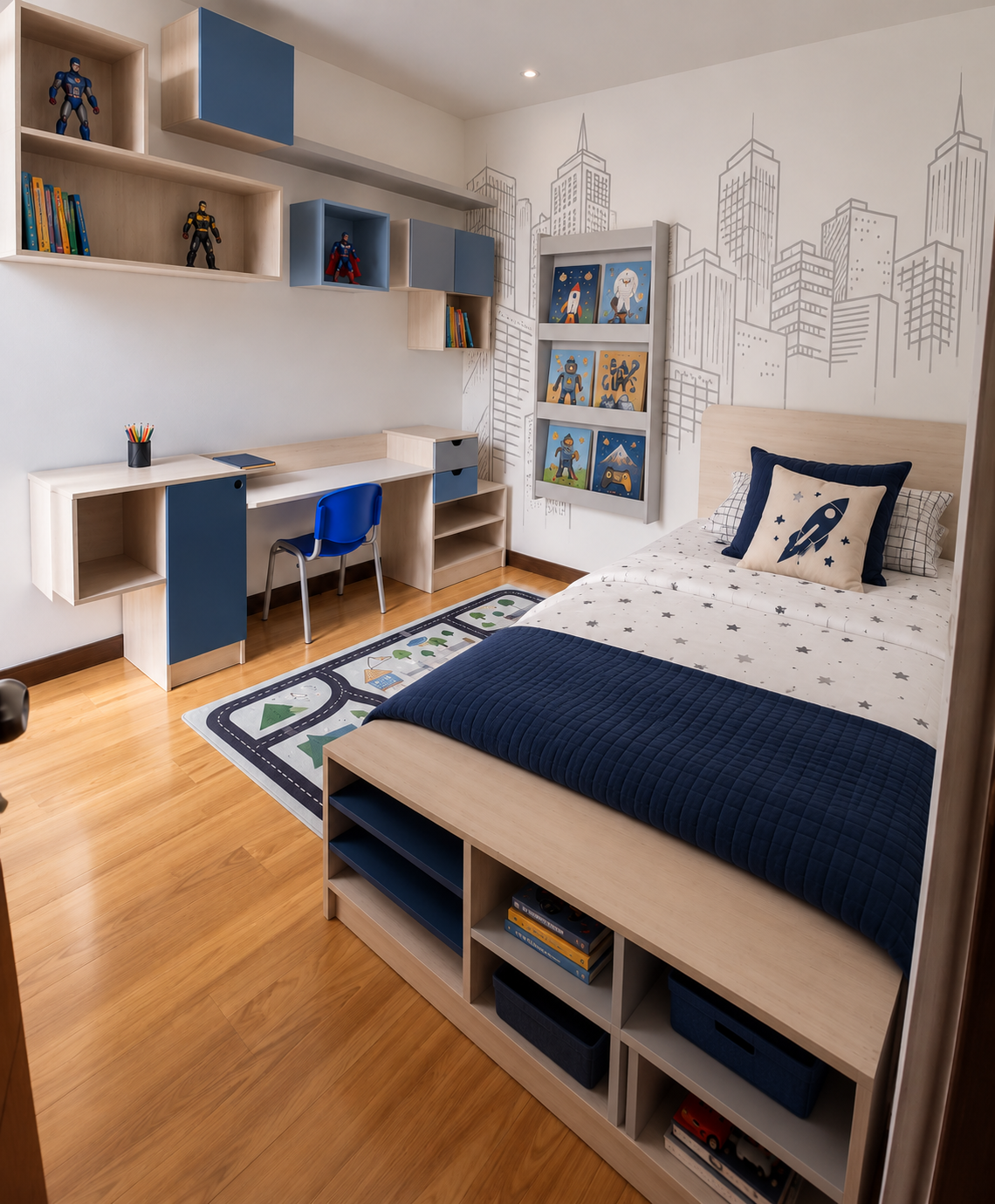
In the bedroom shown here, the sleep and study areas are visually distinct while still belonging to the same room. The child’s books, toys, and interests remain visible, but they have intentional places within the environment.
Make Organization Easier to Use
Organization should reduce effort, not create another task. For a child who struggles with working memory or multi-step routines, a complicated storage system may look beautiful but be difficult to maintain. Consider visible or easily accessible storage, labeled bins, open shelves, or designated places for frequently used belongings.
Ask a simple question:
How many steps does my child need to complete to put this away?
If the system requires too many steps, simplifying the environment may be more effective than repeatedly reminding the child to stay organized.
Think About Visual Stimulation
A supportive bedroom does not have to be beige, empty, or devoid of personality. Color, books, artwork, collections, and favorite objects can all belong in the space. Instead of automatically removing stimulation, look at how it is organized.
Some children may benefit from reducing competing patterns or visual clutter around areas where they need to concentrate or rest, while still having more expressive elements elsewhere in the room.
The goal is balance, not sensory deprivation.
Use Lighting to Support Different Activities
Lighting can also help communicate what happens in different parts of the room. Natural light or task lighting can support activities at a desk during the day, while softer lighting in the evening can help create a transition toward bedtime.
Rather than relying only on one bright overhead light, consider layers of lighting that can change depending on the activity and time of day.
Start With One Point of Friction
You don’t need to redesign the entire bedroom at once. Observe where your child is struggling.
Are clothes constantly ending up on the floor? Is homework difficult at the desk? Are favorite belongings impossible to find? Does bedtime involve too many transitions?
Choose one point of friction, change something in the environment, and observe what happens.
This is the principle behind my FLOW framework: start by finding the friction, understand the relationship between the person, task, and space, make an intentional environmental change, and then watch how behavior responds.
Most importantly, involve your child in the process. Ask what feels comfortable, what bothers them, and what they wish were easier.
Final Thoughts
A well-designed bedroom won’t “fix” ADHD and that shouldn’t be the goal.
Good environmental design asks a different question:
What can we change in the space so the person doesn’t have to work so hard?
Sometimes the answer is simpler storage. Sometimes it’s a clearer layout, different lighting, less visual competition, or a more predictable place for everyday activities. Small environmental changes can reduce friction and help create a bedroom that supports independence, comfort, and everyday routines while still feeling like your child’s room.
Want to better understand how your child’s environment may be affecting everyday routines?
Every child experiences space differently. A thoughtful environmental assessment can help identify areas of friction and explore practical changes that better support your child’s needs, routines, and independence.